An unhurried introduction
I'm sitting in the studio this morning, bundled up in layer upon layer. I could pop the heater on, but I haven't. There's something about the bite of winter that I cherish every year. The sharp air wakes me up, reminds me that I'm alive.
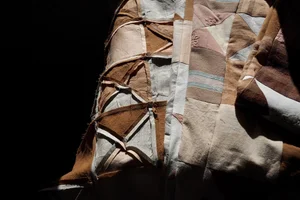
On the other side of the room, sitting on an old armchair that once belonged to my grandmother, is the beginning of my next memory quilt.
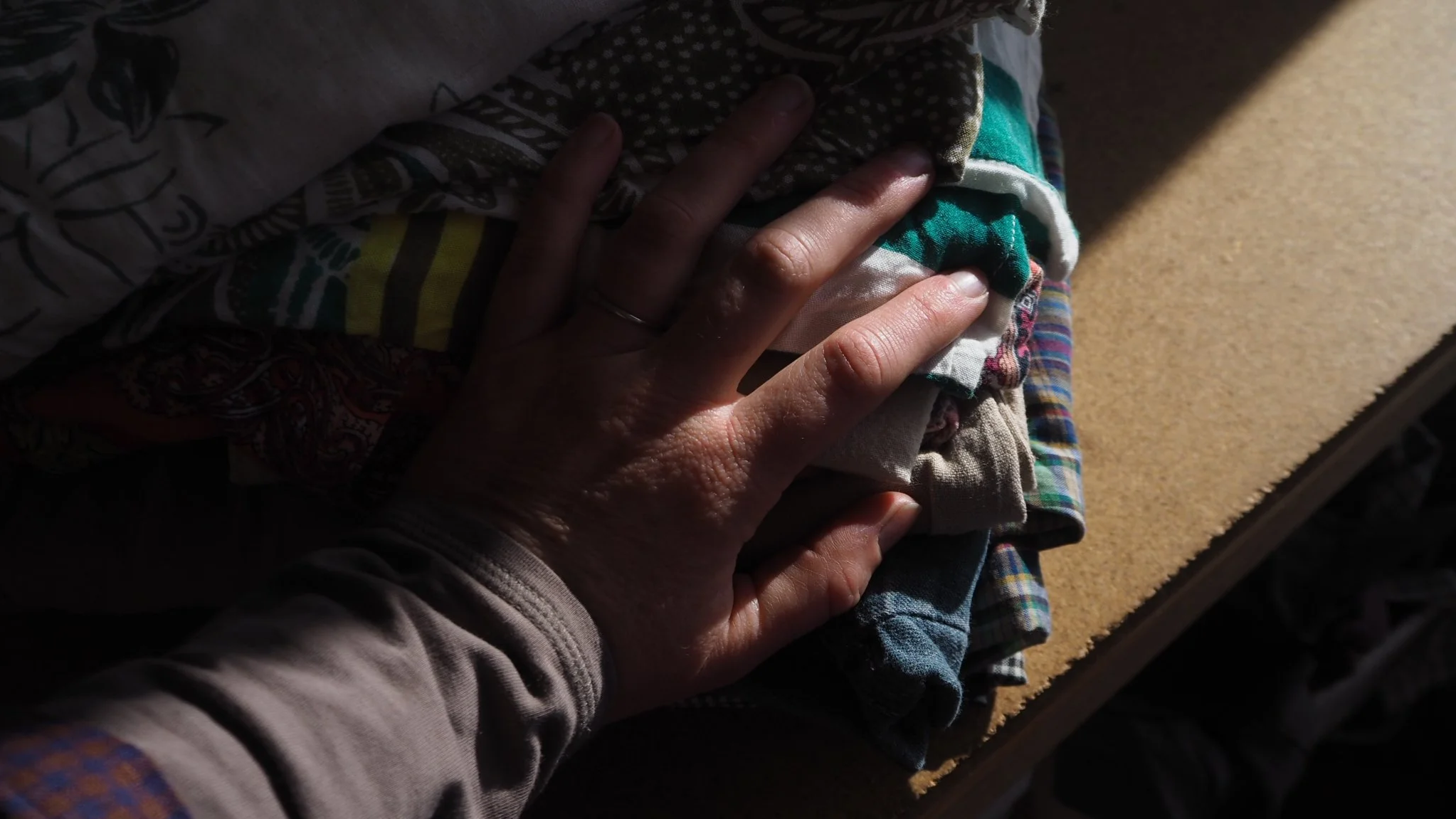
I suspect most people walking into the studio would assume that it's simply a pile of clothes. And they're not exactly wrong. But for me, this is where a quilt begins: a pile of clothes sitting in the studio, slowly becoming familiar to me.
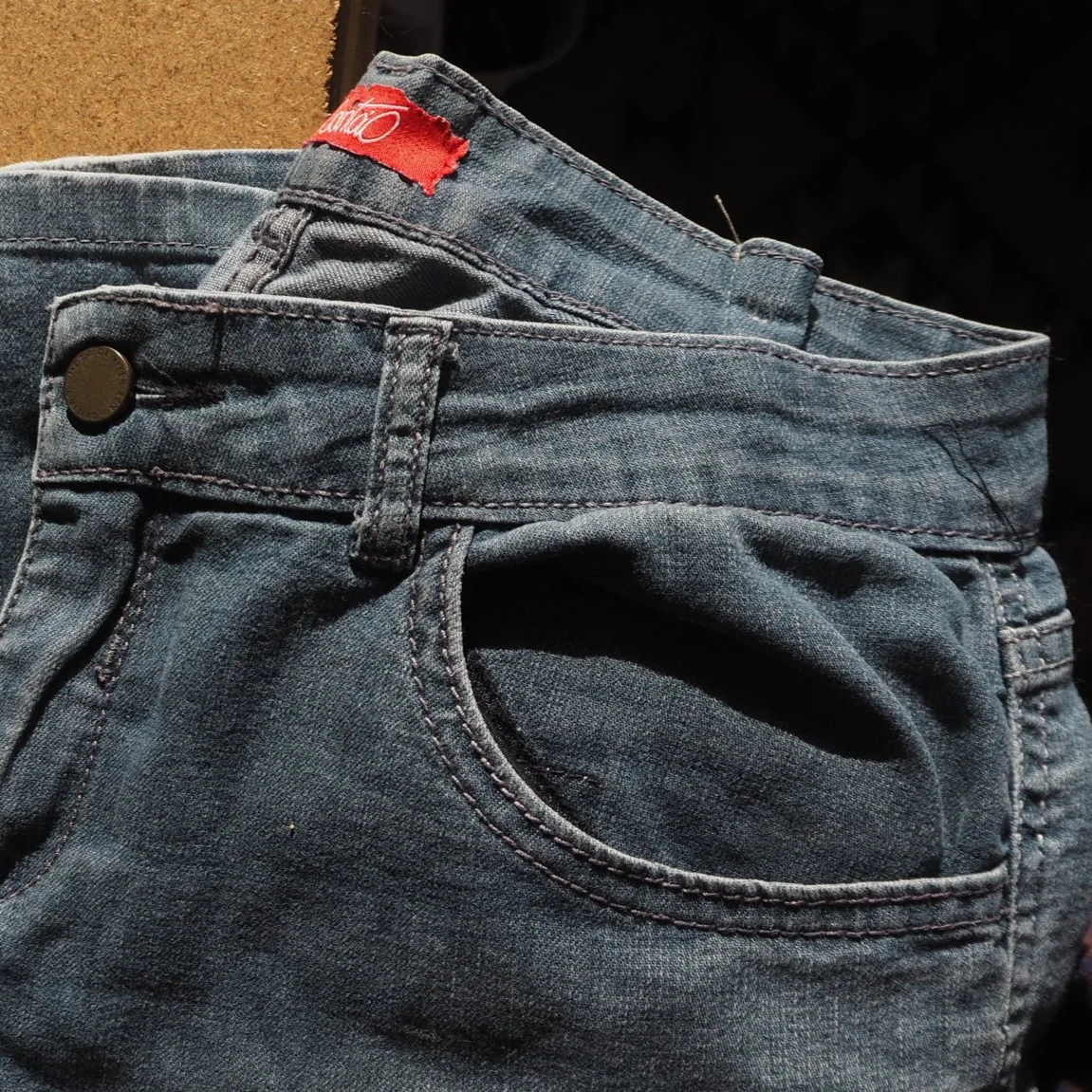
Every memory quilt arrives in much the same way. Bags or boxes of clothing, folded carefully by someone who has spent weeks, months, sometimes even years wondering what these garments might next become. Shirts and dresses, jeans and pyjamas, aprons and jackets, all still carrying the shape of everyday life.
It would be reasonable to think that the transformation from garments to quilt begins when I make the first cut into that stack of clothing.
But it doesn't.
In fact, it often takes me quite some time to cut into anything at all.
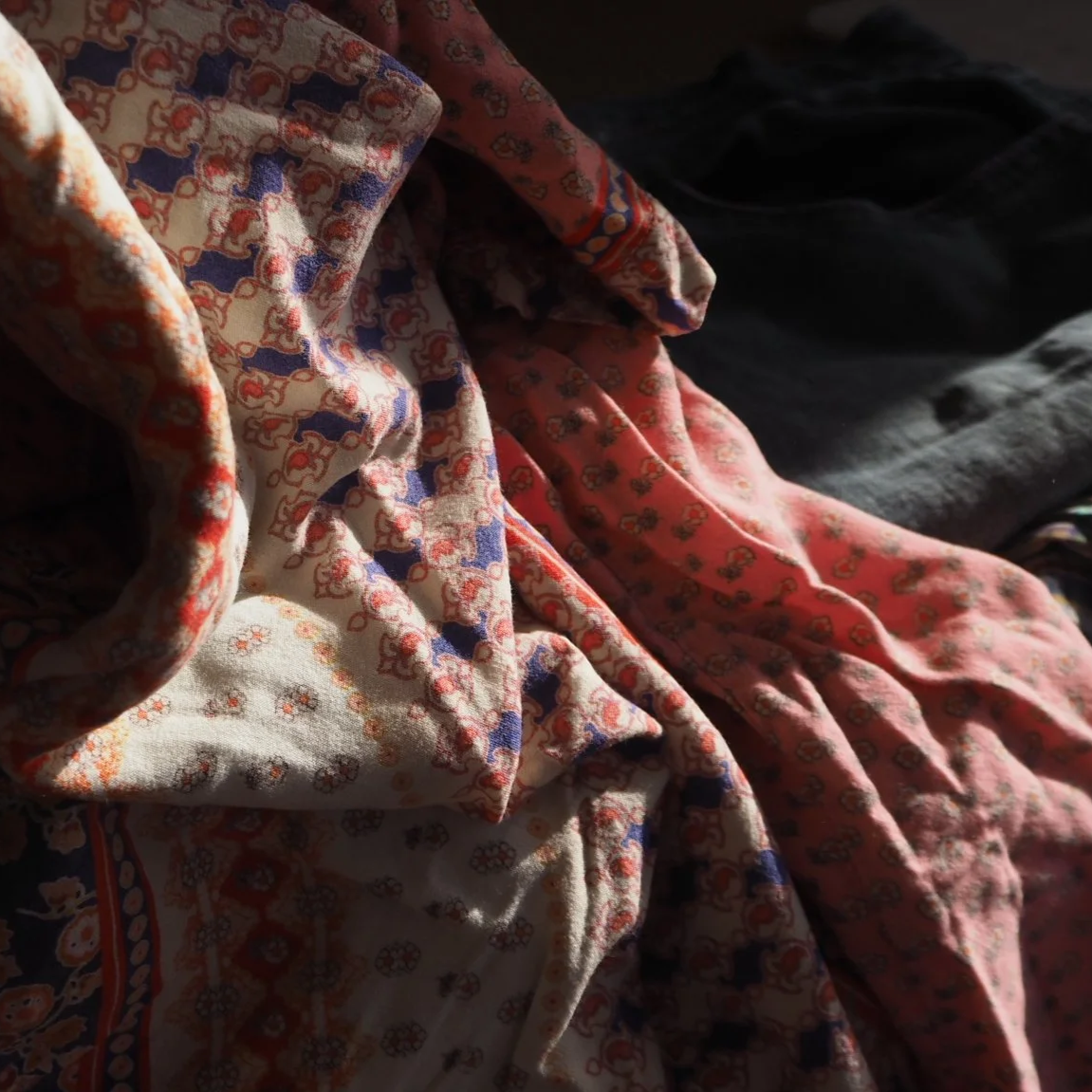
The clothes simply live with me for a while. They sit in the studio while I work on other things. Every now and then I'll unfold them all and spread them across the table, only to stack them back up again. My eyes catch them as I walk past, noticing something I hadn't seen the day before. A particular shade of dusty pink that quietly connects two otherwise unrelated garments. A floral print that suddenly feels more important than I'd first realised. The softened knees of a favourite pair of jeans.
It would be way more efficient to dismantle every garment as soon as it arrived. I could spend an afternoon unpicking seams and reducing the entire collection to tidy stacks of usable fabric, ready for cutting.
But I never do.
I need the clothes to remain clothes for a little while longer. Before they become a quilt, I need the chance to get to know them.
The collection in my studio right now belonged to my late mother-in-law, someone I didn't know especially well because of the ocean between us. Most of her garments are soft, sun-washed colours. Lightweight cottons and breezy fabrics that made perfect sense in the tropical climate of north eastern Brazil. In a funny sort of way, spending time with these clothes has become a way of getting to know her. Obviously not in the way family and close friends knew her, but through the things she reached for day after day, the colours she surrounded herself with, the fabrics she wore against her skin. It's a quiet introduction that life never really afforded us.
Nestled amongst the pile is a brilliantly vibrant red floral skirt she wore while playing maracatu (traditional drumming). It is impossible to ignore. It doesn't belong with the rest of the palette, and nor would I want it to. My job isn't to quieten it down. It's to find a way for it to belong. The longer this pile has been sitting in my studio, the more I’ve actually noticed the warm pinks and reds in some other garments. I’ve shuffled them around, working out how to create harmony between all the different elements.
This same quiet unfolding happens with every memory quilt, almost without my noticing. At some point the clothes stop feeling like individual garments and start feeling like a quilt. I honestly can’t say exactly how, or when, that happens. One day I'm looking at a wardrobe. The next I'm looking at colour, rhythm and balance. Design ideas begin quietly finding their way into my sketchbook. Fabrics come down from my shelves to help the client's garments settle into conversation with one another.
Then, almost imperceptibly, the quilt begins introducing itself.
And only then do I begin cutting.
I've often wondered why I work this way. It certainly isn't the quickest path from bag of clothes to finished quilt. But the longer I make memory quilts, the more convinced I become that this quiet season at the beginning isn't somehow separate from the making.
It is the making.
The cutting will come.
The sewing will come.
Because every piece deserves to be known before it is transformed.